
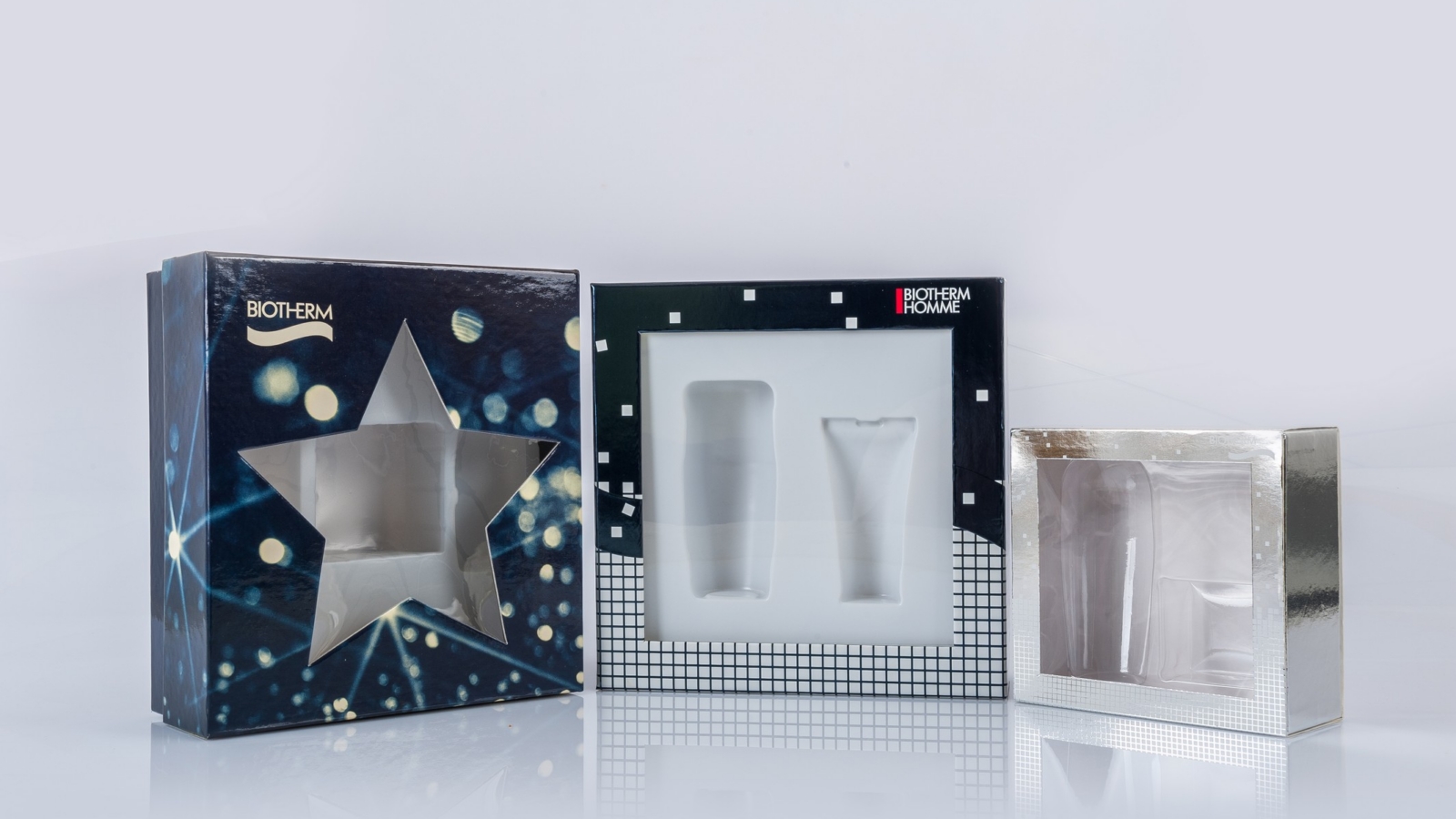
Skincare packaging boxes with windows help beauty brands showcase products while maintaining a premium presentation. For wholesalers, distributors, and skincare brands, the challenge is balancing product visibility with protection from light, dust, impact, and handling during storage and transport.
A transparent window can reveal a serum bottle, sheet mask pack, cream jar, or essential oil container before the customer opens the box. However, transparency alone does not protect light-sensitive formulas from ultraviolet (UV) or visible light. The right design combines suitable window materials, carefully planned openings, protective inserts, and appropriate outer packaging.
This guide explains how to choose window materials, improve shelf appeal, and specify custom skincare packaging boxes for different product categories.
1. Why Choose Skincare Packaging Boxes with Windows?
Window packaging combines visual merchandising with the practical functions of a folding carton or gift box. It allows brands to display selected product details without exposing the entire package.
Improve Shelf Appeal and Product Visibility
On crowded retail shelves, packaging needs to communicate product value quickly. A well-positioned window can reveal a product’s color, shape, finish, or arrangement, helping shoppers understand what they are buying.
For example, a window on a skincare gift set can display coordinated bottles and jars. A smaller opening can highlight a premium serum bottle, while a wider window can showcase multiple sheet mask packs.
The best window design reveals the most relevant product details without competing with the brand name, product benefits, or other essential packaging information.
Support Premium Brand Positioning
Luxury skincare packaging often relies on the relationship between materials, color, structure, and finishing. A transparent window can complement foil stamping, embossed logos, textured paper, or matte lamination.
For premium gift sets, brands can use a framed window with gold or silver foil details. Minimalist skincare brands may prefer a clean rectangular opening with restrained typography.
The objective is not to make the largest possible window. It is to create a visual balance between the product and the printed packaging.
Help Buyers Evaluate Products Before Opening
For wholesale buyers and retailers, window packaging can make product identification easier. It can also help shoppers distinguish between different fragrances, shades, product sizes, or gift set combinations.
However, a window is most useful when the visible product communicates meaningful information. If the product is highly sensitive to light or the primary container already provides a clear product view, a fully opaque carton may be the better choice.

2. PET vs. PVC: Which Window Material Should You Choose?
PET and PVC are common materials used for transparent packaging windows. The right option depends on clarity, stiffness, forming requirements, environmental goals, budget, and the intended packaging structure.
PET Window Film
PET, or polyethylene terephthalate, is widely used for transparent packaging components. It can provide a clear view of the product and support a neat, modern presentation.
Potential advantages include:
- Clear product visibility for skincare bottles, jars, and gift sets.
- Options for different film thicknesses and window sizes.
- Compatibility with many paperboard carton designs.
- Availability of recycled-content options, depending on supplier and specification.
PET is worth considering when a brand wants a clean appearance and is evaluating packaging recyclability. However, the use of PET film does not automatically make the finished box recyclable. Paperboard, adhesives, coatings, and local recycling infrastructure also matter.
PVC Window Film
PVC, or polyvinyl chloride, is another material used in transparent packaging. Depending on the grade and construction, it can offer suitable clarity and flexibility for specific box designs.
Potential advantages include:
- Transparent display for selected cosmetic products.
- Flexibility for different window shapes and structures.
- Availability through established packaging supply chains.
Buyers should confirm the film grade, thickness, appearance, and compatibility with the selected adhesive and printing process. They should also review the environmental implications and end-of-life options for the complete package.
PET vs. PVC Comparison
| Evaluation Factor | PET Window Film | PVC Window Film |
|---|---|---|
| Product visibility | Can provide clear visibility | Can provide clear visibility |
| Design flexibility | Suitable for many window formats | Suitable for many window formats |
| Sustainability considerations | Recycled-content options may be available; verify local recycling compatibility | Recycling and disposal options vary by market |
| UV protection | Must be specified and verified | Must be specified and verified |
| Best selection method | Evaluate clarity, stiffness, sourcing, and end-of-life requirements | Evaluate grade, flexibility, sourcing, and end-of-life requirements |
Neither material should be assumed to provide sufficient UV protection simply because it is transparent. Buyers who need UV filtering should request technical data and test results for the exact film specification.
For packaging that combines paperboard with a transparent film patch, discuss the full material structure with your supplier before finalizing the design.
3. How to Balance Product Visibility with UV Protection
One of the most important decisions when designing skincare packaging boxes with windows is determining how much of the product should remain visible.
The answer depends on the formula, primary container, retail environment, and expected storage conditions.
Identify Whether the Formula Is Light-Sensitive
Some skincare ingredients and formulations can be affected by exposure to light. Vitamin C formulations, retinoid products, certain botanical oils, and other light-sensitive ingredients may require additional protection.
The degree of sensitivity varies by ingredient, formulation, concentration, and primary packaging. UV exposure is not the only concern; some formulations may also be affected by visible light.
Before selecting a window design, brands should consult their formulation or packaging teams to determine the product’s light-protection requirements.
Use the Window to Reveal Only Essential Details
A smaller or strategically positioned window can create a strong display effect while reducing the exposed area.
Consider these approaches:
- Narrow vertical window: Highlights a serum bottle or dropper container.
- Small framed window: Reveals a cream jar or selected product detail.
- Partial front window: Shows the arrangement of a skincare gift set.
- Selective cutout: Uses the product silhouette or brand motif as a visual feature.
Reducing window size can limit the exposed area, but it does not guarantee adequate light protection. The actual protection depends on the film, window position, light exposure, and primary container.
Combine Window Packaging with Light-Protective Primary Containers
When a formula requires substantial light protection, the primary container should carry most of that responsibility.
Depending on product requirements, brands may consider amber, opaque, tinted, or specifically UV-filtering bottles and jars. The chosen container must be evaluated for the actual formulation and intended shelf life.
An outer carton with a clear window may still be appropriate if the primary container provides sufficient protection and the complete packaging system passes the required stability assessments.
For highly light-sensitive products, an opaque carton or a smaller window may be more appropriate than a large transparent panel.
Verify UV Protection Rather Than Relying on Appearance
A tinted or thick-looking window does not automatically provide reliable UV protection. Likewise, a clear film may transmit a significant amount of light unless it has been specifically engineered and tested for filtering performance.
For light-sensitive skincare products, request relevant information such as:
- UV and visible-light transmission data for the specified film.
- Test conditions and wavelength range.
- Compatibility between the window material and packaging adhesives.
- Stability evidence for the finished product in its intended packaging.
Where product stability is critical, assess the complete package rather than relying on a film specification alone.
4. Design Window Packaging for Different Skincare Products
Different product formats need different balances of display, protection, and structural support. A single window design may not suit every product in a skincare range.
Skincare Gift Sets
Skincare gift sets often contain multiple items, such as cleansers, moisturizers, serums, and eye creams. A larger window can help customers see the assortment and understand the value of the set.
For luxury gift boxes, consider:
- A structured insert that keeps each item in position.
- A window aligned with the most visually appealing products.
- Foil stamping or embossing around the window.
- A rigid box or reinforced folding carton appropriate to the product weight.
For gift sets containing light-sensitive products, coordinate the window layout with the primary containers’ protective properties.
Sheet Masks and Facial Masks
Sheet masks are commonly packaged in individual sealed sachets. When designing a multipack or gift box, the window can show the sachet artwork and the number of products included.
The packaging should maintain the sachets’ integrity and avoid sharp edges or pressure points that could damage the packs. A suitable insert or internal divider may help organize multiple sachets.
For individually wrapped masks, confirm whether the sachet itself provides the necessary barrier protection. The outer window box should not be treated as a replacement for the sealed primary packaging.
Essential Oils and Serum Bottles
Essential oils and concentrated serums may have specific light-protection requirements. Their suitability for window packaging depends on the formulation and primary container.
A narrow window can display the bottle shape while leaving more of the outer box opaque. If the product requires stronger light protection, consider an opaque carton or a primary container designed to limit light transmission.
For dropper bottles, also check that the internal structure prevents the glass container from moving excessively during shipping.
Cream Jars and Moisturizers
Cream jars are often suitable for window display when the product’s primary container provides adequate protection.
A front or top window can reveal the jar’s color, lid finish, or decorative details. For heavier glass jars, the box needs a stable base and a properly fitted insert to help limit movement and impact.
The structural design should be evaluated with the actual jar dimensions and weight, not only a visual mockup.
5. How to Add Impact Protection Without Hiding the Product
A window can improve presentation, but it does not replace structural packaging protection. Skincare products may experience vibration, compression, drops, and handling during fulfillment and transportation.
Select an Appropriate Box Structure
The choice between a folding carton and a rigid gift box depends on product weight, shipping conditions, brand positioning, and budget.
A folding carton may suit lightweight skincare sets and retail display. A rigid box may be more appropriate for premium gift sets or heavier containers that need a stronger structure.
The window opening should not weaken important load-bearing areas. Large cutouts may require changes to the panel layout, board specification, or internal reinforcement.
Use Inserts to Keep Products in Place
A well-designed insert helps separate items and limit movement inside the box. Depending on the product and presentation goals, possible options include paperboard inserts, molded pulp, or suitable foam materials.
When choosing an insert, consider:
- Product dimensions and weight.
- Fragility of glass containers.
- Clearance around caps, pumps, and droppers.
- Contact points between products and the insert.
- Ease of packing and unpacking.
- Compatibility with the packaging’s sustainability objectives.
The insert should hold the products securely without applying excessive pressure to the container or its closure.
Test the Complete Packaging System
Before mass production, test a representative package containing the actual product or a dimensionally and weight-accurate substitute.
Useful checks include:
- Fit and movement tests for each product.
- Visual inspection of the window patch and adhesive.
- Closure and opening tests.
- Appropriate drop, vibration, or transport simulation tests based on the distribution route.
- Inspection for cracked containers, damaged cartons, loose film, and product movement.
Testing should reflect the actual shipment configuration and handling risks. Passing a visual inspection alone does not establish shipping performance.
6. Sustainable Design Considerations for Window Cosmetic Packaging
Sustainability is an important purchasing consideration, but buyers should evaluate the entire packaging structure instead of focusing on one material.
Evaluate Recycled Content and Material Separation
PET window film with recycled content may be available for some applications. Ask suppliers to specify the recycled-content percentage, material grade, and supporting documentation.
A paperboard box with a plastic window may require separation before recycling, depending on local collection and processing systems. Adhesives, coatings, foil finishes, and lamination can also influence recyclability.
If recycling is a priority, discuss whether the window can be removed easily or whether a design with fewer material types is more suitable.
Consider a Die-Cut Window Without Film
An open cutout removes the transparent plastic film and allows direct visibility of the product or its inner packaging.
This approach may suit products that are already protected by their primary containers and do not require the outer window to block dust or provide an additional barrier.
However, an open window does not protect the exposed area from dust or handling. It is also not appropriate for every product or distribution environment.
Match Sustainability Claims to Evidence
Avoid assuming that a package is recyclable, biodegradable, or environmentally preferable based solely on the name of one component.
For wholesale orders, ask suppliers for material declarations, recycled-content documentation, and recycling guidance relevant to the target market. Evaluate these details alongside durability, production waste, shipping protection, and the intended product lifespan.
7. Customization Checklist for Wholesale Skincare Packaging Boxes
Before requesting a quotation for custom skincare packaging boxes with windows, prepare a clear packaging brief. This helps suppliers evaluate the design, material requirements, and production process more accurately.
| Specification | Questions to Confirm |
|---|---|
| Product dimensions | What are the exact dimensions and weight of each item? |
| Box structure | Is a folding carton, rigid gift box, or another format required? |
| Window material | Is PET, PVC, or another suitable material preferred? |
| Window layout | Which product features should remain visible? |
| Light protection | Does the formula require UV filtering or reduced visible-light exposure? |
| Internal insert | Is separation or cushioning required for glass bottles and multiple products? |
| Printing and finishing | Are foil stamping, embossing, matte lamination, or special textures needed? |
| Sustainability | Are recycled content, material separation, or market-specific recycling requirements important? |
| Testing | Which fit, stability, and transportation tests are necessary? |
| Order planning | What are the target quantity, sampling needs, and delivery schedule? |
For luxury packaging projects, the final specification should coordinate appearance with product protection and manufacturing feasibility. Confirm the approved artwork, window dimensions, material structure, and sample performance before authorizing bulk production.
8. Frequently Asked Questions
Are PET window boxes better than PVC window boxes for skincare packaging?
Neither material is universally better. PET may be attractive when recycled-content options and recycling considerations matter, while PVC may suit certain existing designs and supply requirements. Compare clarity, stiffness, compatibility, cost, and end-of-life options for the exact specification.
Do clear window boxes protect skincare products from UV light?
Not necessarily. Standard transparent films should not be assumed to block UV or visible light sufficiently. Ask for transmission data and evaluate the complete packaging system against the formulation’s stability requirements.
Can luxury skincare gift boxes include windows and still protect glass bottles?
Yes, when the box structure, window opening, and internal insert are designed together. A fitted insert can help reduce movement, but the finished package should undergo appropriate testing for its distribution conditions.
Are window cosmetic packaging boxes recyclable?
Recyclability depends on the materials used, the way the window is attached, local collection systems, and available processing facilities. A paperboard box with a plastic film window may require separation or may not be accepted in every recycling stream.
What information should wholesalers provide when requesting a custom quotation?
Provide product dimensions, container materials, product weight, order quantity, box style, window preferences, artwork, finishing requirements, and delivery expectations. Also identify any light-protection, cushioning, or sustainability requirements that could affect the packaging structure.
Conclusion: Build Window Packaging Around the Product’s Needs
Skincare packaging boxes with windows can combine product visibility, premium branding, and practical retail presentation. The strongest designs do not prioritize transparency at the expense of formula protection or shipping performance.
Start by understanding the skincare formula and primary container. Then select the window material, opening size, box structure, and internal insert to match the product’s requirements. Verify UV protection through relevant technical data, and test the complete package before committing to bulk production.
For brands and wholesalers developing custom luxury skincare packaging, a clear design brief helps align visual appeal, structural performance, material choices, and production feasibility. IJEN can be considered for custom packaging discussions based on your project specifications, with final material and design options confirmed during quotation and sampling.
